“A city is what it is because its citizens are what they are.” (PLATO)
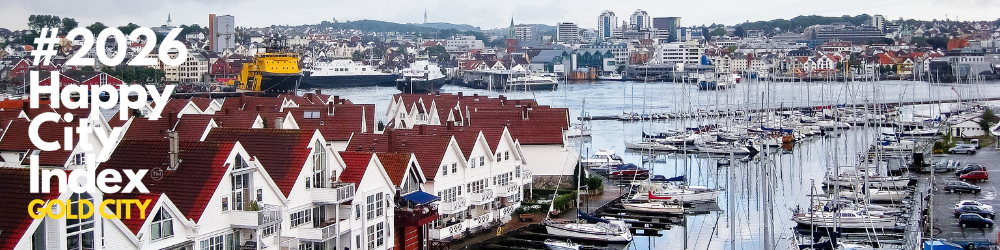
STAVANGER (rank 37) - Norway
Methodology and interpretation notice
The Happy City Index is an independent comparative research project based on a structured methodology and multi-source data assessment. The results presented here are provided for informational and benchmarking purposes only and should not be treated as a definitive or exhaustive statement of fact.
For proper interpretation, readers should consult the
published methodology
and verify relevant data with official sources where necessary.
Spotted a mistake? Join us
We have made every effort to ensure reliable and comparable data. Still, errors may occur. If you notice something that should be corrected,
click here
and help improve the Index. By doing so, you can also join us as a one-time contributor and become part of our global community of researchers.
Happy City Index 2026
Stavanger compared with the overall Index average
Total score6432
CategoryGOLD
The table below presents all 64 Happy City Index indicators for Stavanger against the overall average.
Theme: Citizens
Indicator
Stavanger
Avg
Urban Innovation Ecosystem Potential
132.83
86.02
School Density
0.66
0.71
Higher Education Accessibility
yes
—
Presence of a Globally Ranked Higher Education Institution
601
276.16
Cost of Higher Education Compared to Average Annual Salary
0%
0.07%
Residents with a Master's Degree (%)
12.8%
12.40%
Population Able to Communicate in a Foreign Language (%)
90.0
34.14%
Use of Electronic Banking Services (%)
97
79.27%
Population Aged 65+ Benefiting from Municipal Home Care (%)
13.5%
10.51%
Homeless People per 10,000 Residents
0.99
5.27
Theme: Governance
Indicator
Stavanger
Avg
Availability of City Website
1
2.11
Net Internal Migration Rate per 1,000 Population
8.40
3.58
Pupils per School Building
235.93
380.04
Employment in Creative Industries (%)
4.6
4.62%
Housing Affordability Ratio
4.64
5.12
Housing Affordability Ratio (Rent)
25%
32.32%
Cultural Institutions per 100,000 Residents
4.6
8.15
Libraries per 10 km²
0.56
1.16
Voter Turnout in the Last Local Elections (%)
66.7
49.79%
Open Data Portal Availability
yes
—
Datasets Available in Machine-Readable Formats
yes
—
Fault Reporting System via Website or Mobile App
yes
—
Electronic Payments for Municipal Services
yes
—
Online Appointment Booking with City Hall
yes
—
Up-to-Date Official Development Strategy
yes
—
Key Elements Included in the Strategy
5
4.5
AI Awareness in City Strategies
yes
—
Theme: Environment
Indicator
Stavanger
Avg
Annual Average PM2.5 Concentration
7.00
11.86
Green Mobility Share (%)
46.0%
45.25%
Waste Generated per Resident
0.77
0.51
Population Served by Sewage Treatment Facilities (%)
90
95.46%
Recycling Rate (%)
56
44.29%
Landfill Waste Burden
0.339
0.28
Biodiversity Protection Strategy
yes
—
Theme: Economy
Indicator
Stavanger
Avg
GDP per Capita
65,270 GBP
36,208 GBP
GDP Growth (%)
2.10%
0.02%
Patents per 100,000 Inhabitants
99.60
178.84
Businesses per 1,000 Residents
128.57
138.18
City Fiscal Power Index
27.35%
25.56%
Annual Average Unemployment Rate
4.7
5.58%
Annual Average Youth Unemployment Rate
12.8
12.44%
Youth Unemployment Ratio
2.7
2.46
Percentage Deviation in Earnings Relative to the National Average
27%
43.01%
Paid Parental Leave Weeks at 50% or More of Salary
59
24.21
Theme: Health
Indicator
Stavanger
Avg
Psychiatrists per 100,000 Inhabitants
29.70
16.38
Mental Health or Well-Being Strategy
yes
—
Strategy to Prevent and Address Hate Speech or Cyberbullying
no
—
Licensed Medical Doctors Practising in the City (FTE)
7.58
5.18
Population Covered by Medical Insurance (%)
100
97.69%
Intentional Homicides per 100,000 Residents
0.00
20.62
Adults Classified as Overweight or Obese (%)
55
52.29%
Parks per km²
1.82
1.09
Green Space per Capita
123.95
72.57
Average Weekly Working Hours
38.4
40.52
Average Number of Paid Vacation Days
25
21.51
Life Expectancy at Birth
83.1
81.26
Theme: Mobility
Indicator
Stavanger
Avg
Accessibility of Electronic Payment Systems in Transport
3
2.51
Distance to the Nearest International Airport
14
21.44
Access Modes to the Nearest Airport
3.00
3.17
Public Transport Ridership per Capita
257.14
193.80
Accessible Public Transport Fleet (%)
100
91.18%
Road Traffic Accidents per 1,000 Residents
7.91
8.13
Open Public Transport Data Availability
yes
—
Integrated Journey Planner Availability
yes
—
We use cookies on all our websites to gather anonymous data to improve your experience of our websites and serve relevant ads that may be of interest to you. Please refer to the Privacy Policy to find out more. By continuing, scrolling the page or clicking a link, you agree to the use of cookies.